THE INTERNET MAY FORGET.
THE BLOCKCHAIN CAN'T.
CRTSHT began in 2021, when images discovered wallets and almost every browser tab seemed to promise a new economy. The MORE-Algorithm — My Only Rare Experience generated 128 creatures, along with prints, hashes, wallets, metadata and enough technical certainty to make the whole thing seem inevitable. Then the noise moved on. The files remained.
Shhhhiit.
Of course your shit is pinned in an InterPlanetary File System, verified and timestamped on a blockchain, connected to it's own wallet and surrounded by more metadata than it reasonably needs.
But hey, who cares? There is only one physical original. Hang it on a wall, keep it in a box or pass it on. Whatever! It should bring you luck and happiness.
The creatures
Before there was a collection, there was debris.
For a brief moment, almost anything the internet touched became an NFT. Images became assets. Jokes became tokens. Pixels became property. Wallets multiplied, marketplaces appeared overnight, and somewhere between speculation, metadata and collective delirium, a great amount of digital matter turned into shit.
When the dust began to settle, something was moving underneath it.
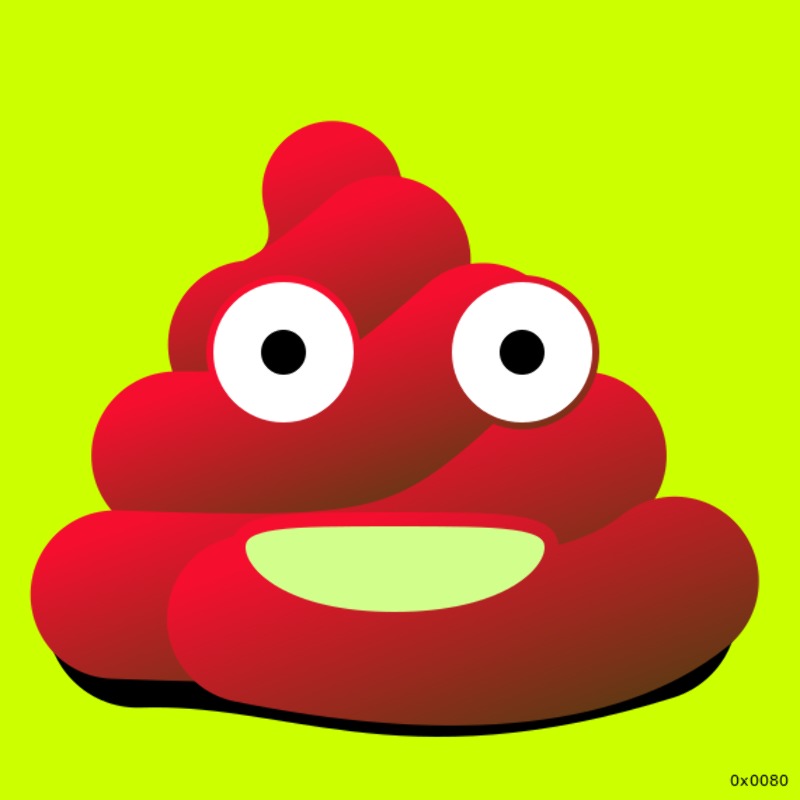
Small creatures were found scattered through the remains of abandoned collections, broken promises and forgotten wallets. Some appeared almost intact. Others seemed to have mutated from whatever had been left behind.
Among the recurring forms are distant relatives of Kin no Unko, Dr. Slurp, and the Ice-Emoji. Shapes migrate, details disappear, designs get recycled.
The poop emoji, after all, is just the ice-cream emoji without the cone.
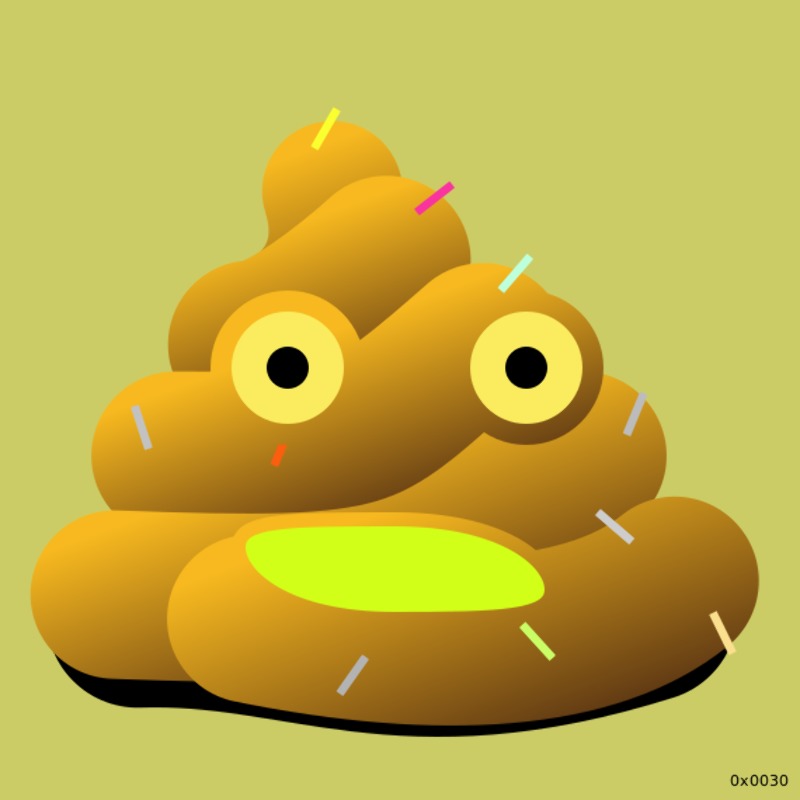
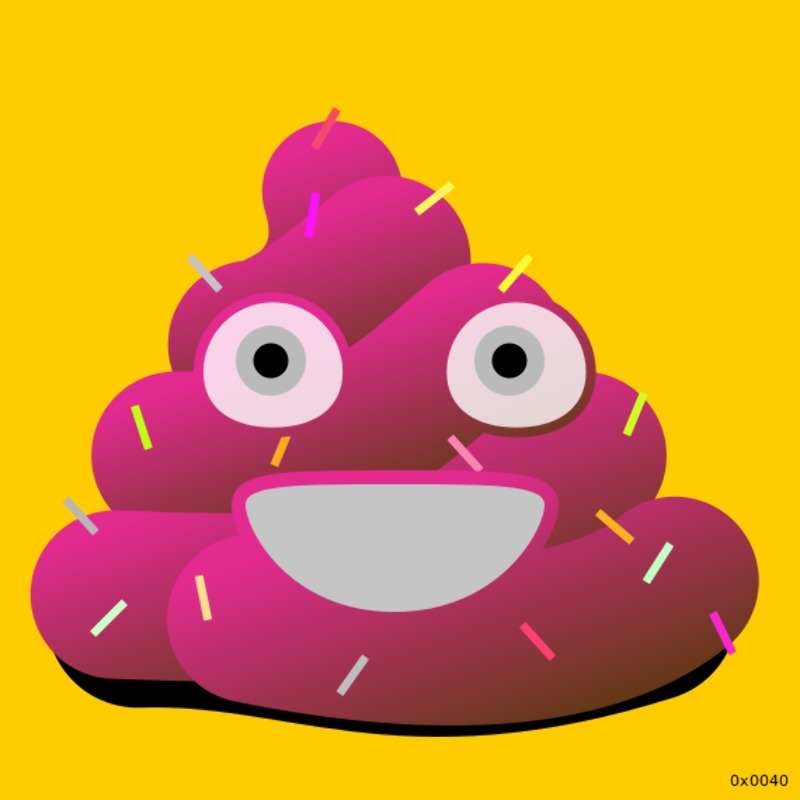
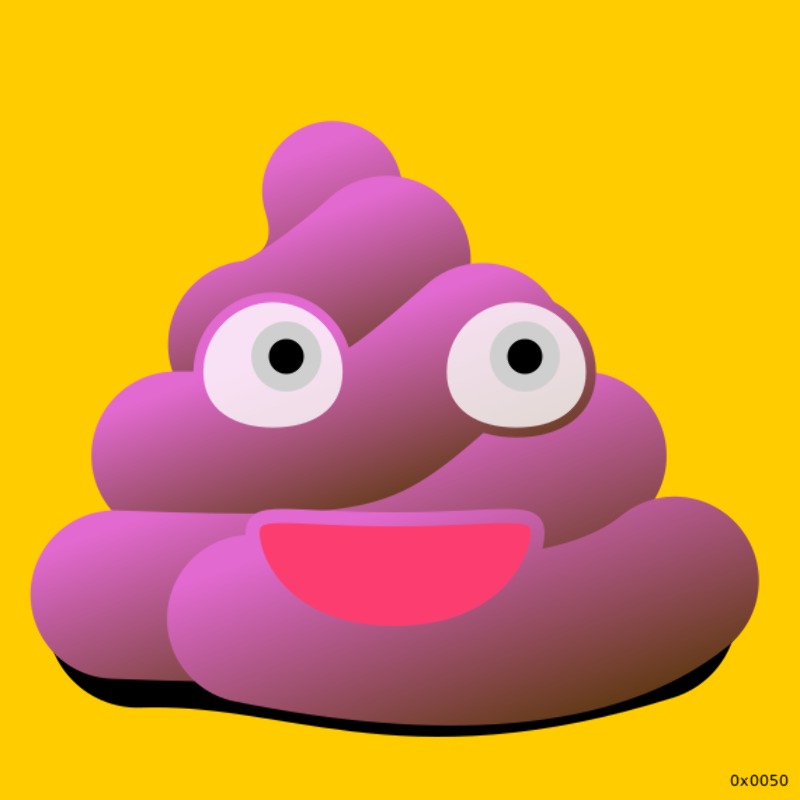
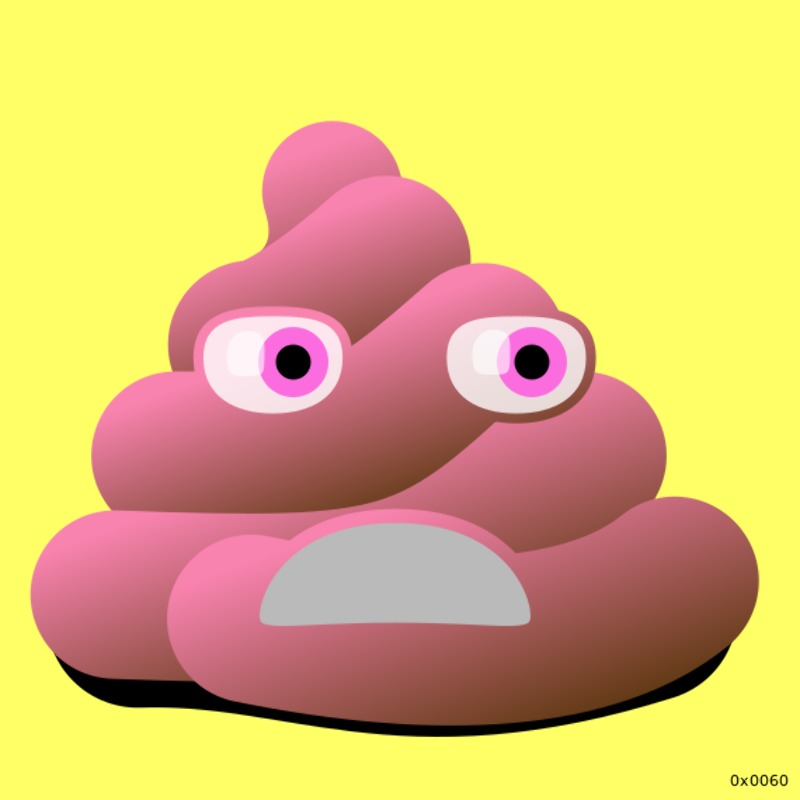
Across 128 images, the same visual DNA keeps mutating until nobody quite remembers where it came from.
Colours drifted. Eyes changed. Accessories accumulated. Backgrounds mutated. Attempts at classification were unsuccessful.
They resemble one another to be family, and differ just enough to cause trouble.
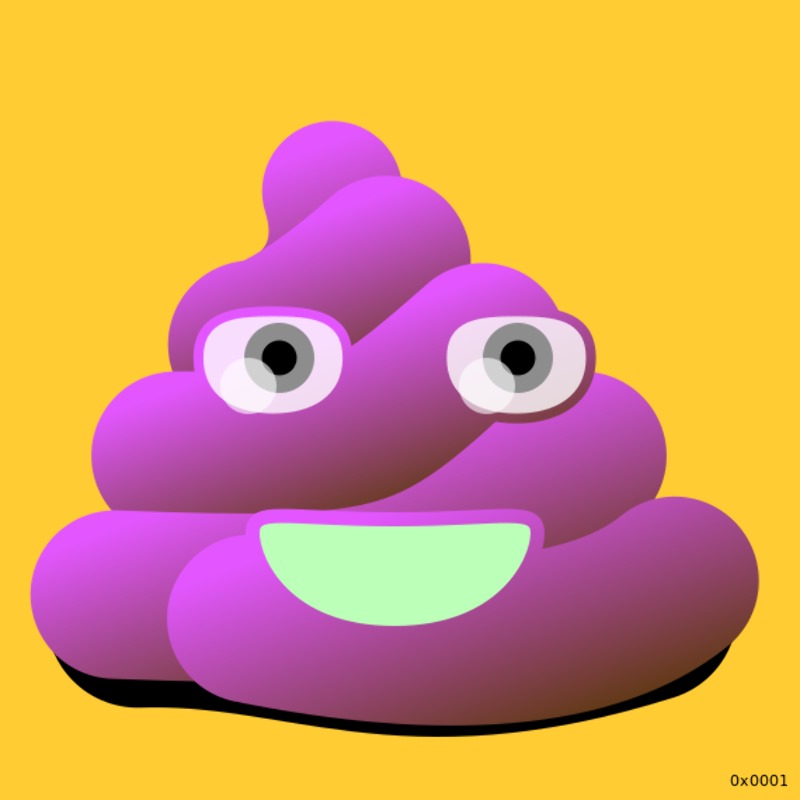
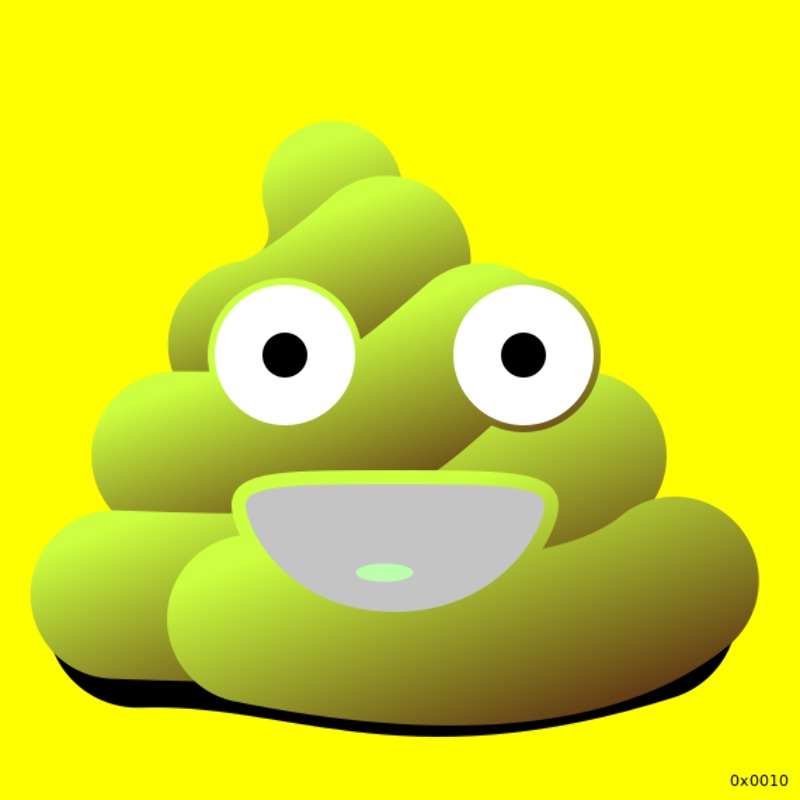
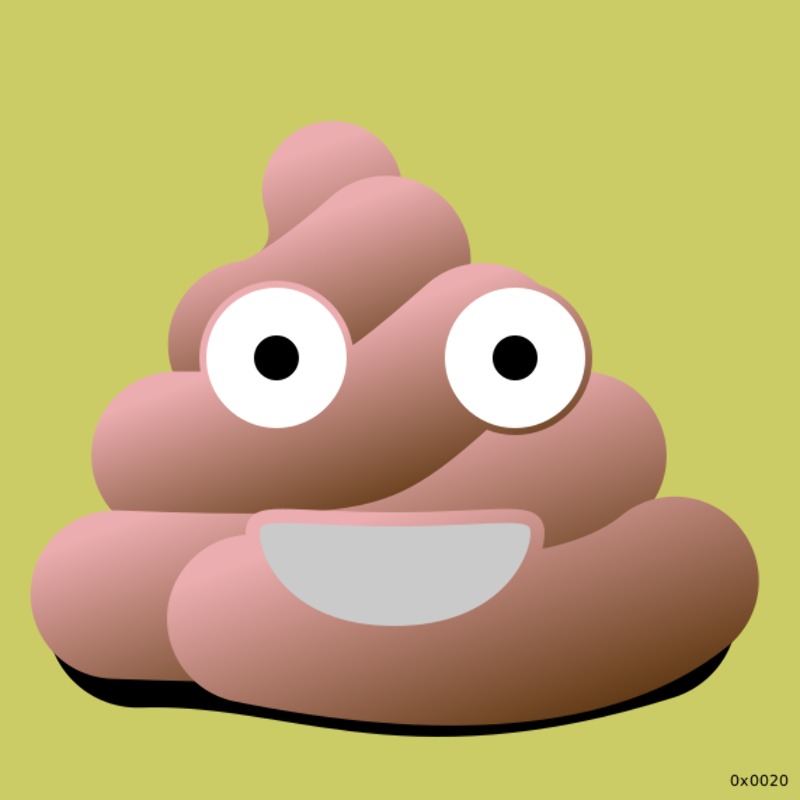
Eventually, 128 specimens were recovered. Each received a hexadecimal identity from 0x0001 to 0x0080.
No ranking. No rarity chart. No chosen hero. Just 128 small lives recovered from the dust of an NFT nightmare.
The TGP
The recovered instructions refer to the physical works with a wonderfully overconfident name: TGP — The Genuine Print.
One creature. One 20 × 20 cm physical original. One hexadecimal identity. Instead of signing the front with a pencil, the system built an unnecessarily elaborate bridge between the object and the network.
The diagram below is not a reconstruction. It survived with the project.
Part instruction manual. Part proof. Part promise from a future that arrived differently.
The technology is very serious. The subject matter is under no obligation to be.
Public / Secret
Every recovered TGP contains two territories: PUBLIC META and SECRET KEY. One was built to be seen. The other was built to remain with the object.
PUBLIC META
hex identity
TGP fingerprint
Ethereum wallet + token record
IPFS references
four visible words
SECRET KEY
24-word mnemonic
private wallet material
sealed with the physical object
only 4U
The four visible words do not open the wallet. That would be a terrible feature.
They act instead as a small recognition ritual: four fragments from the object allow the archive to identify the specimen and wake its private fortune.
The remaining twenty words stay sealed with the work. Some doors are better when they remain doors.
The mooncake
Every CRTSHT appears to have developed a second body: a mooncake. In older records it is also called 金のうんこ — Kin no unko.
No surviving document explains why the creature needed another body. It only shows that the system insisted on one.
The physical TGP carries the creature. The NFT points to the cake. The cake carries the identity back through hashes, addresses and references until the same specimen appears on both sides of the network.
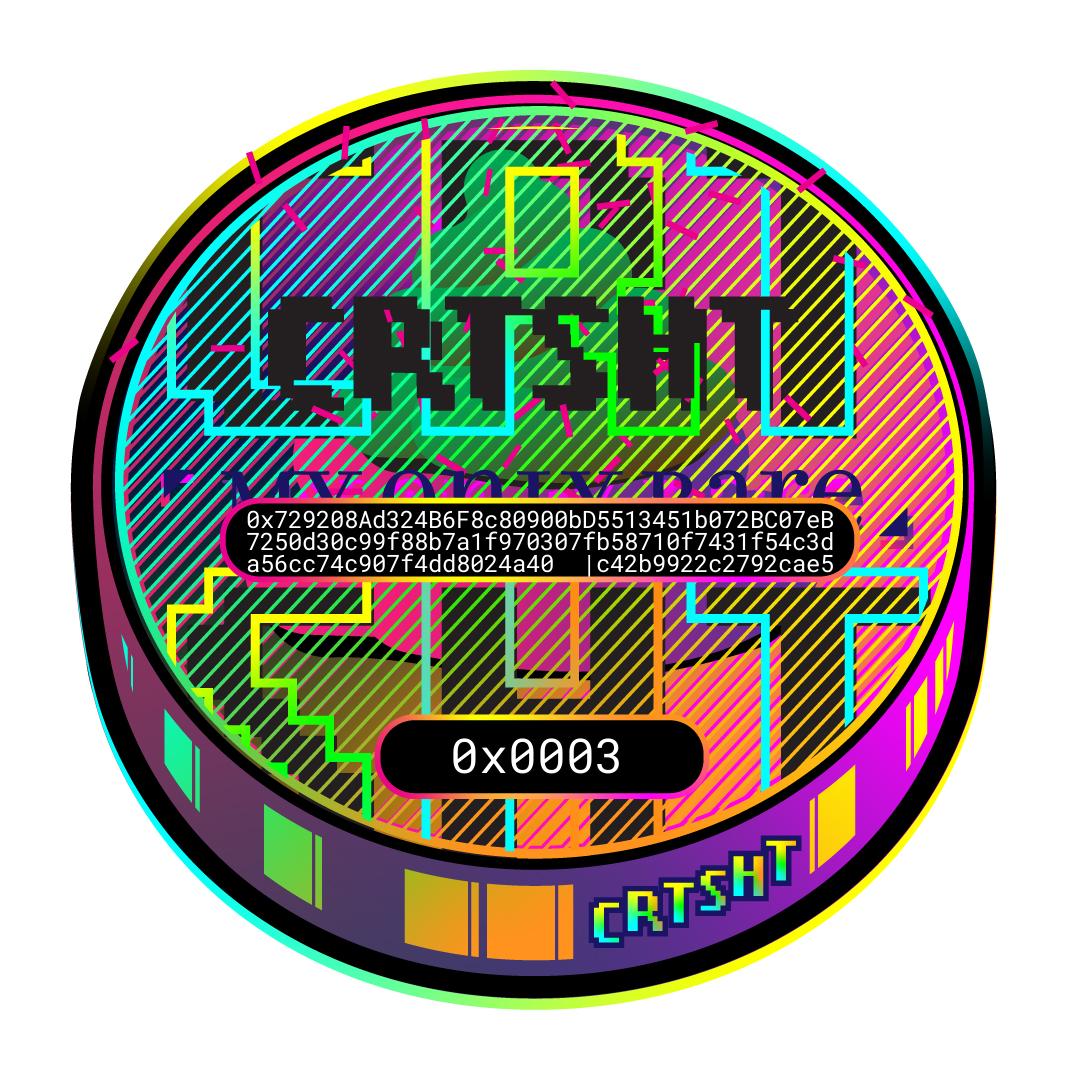
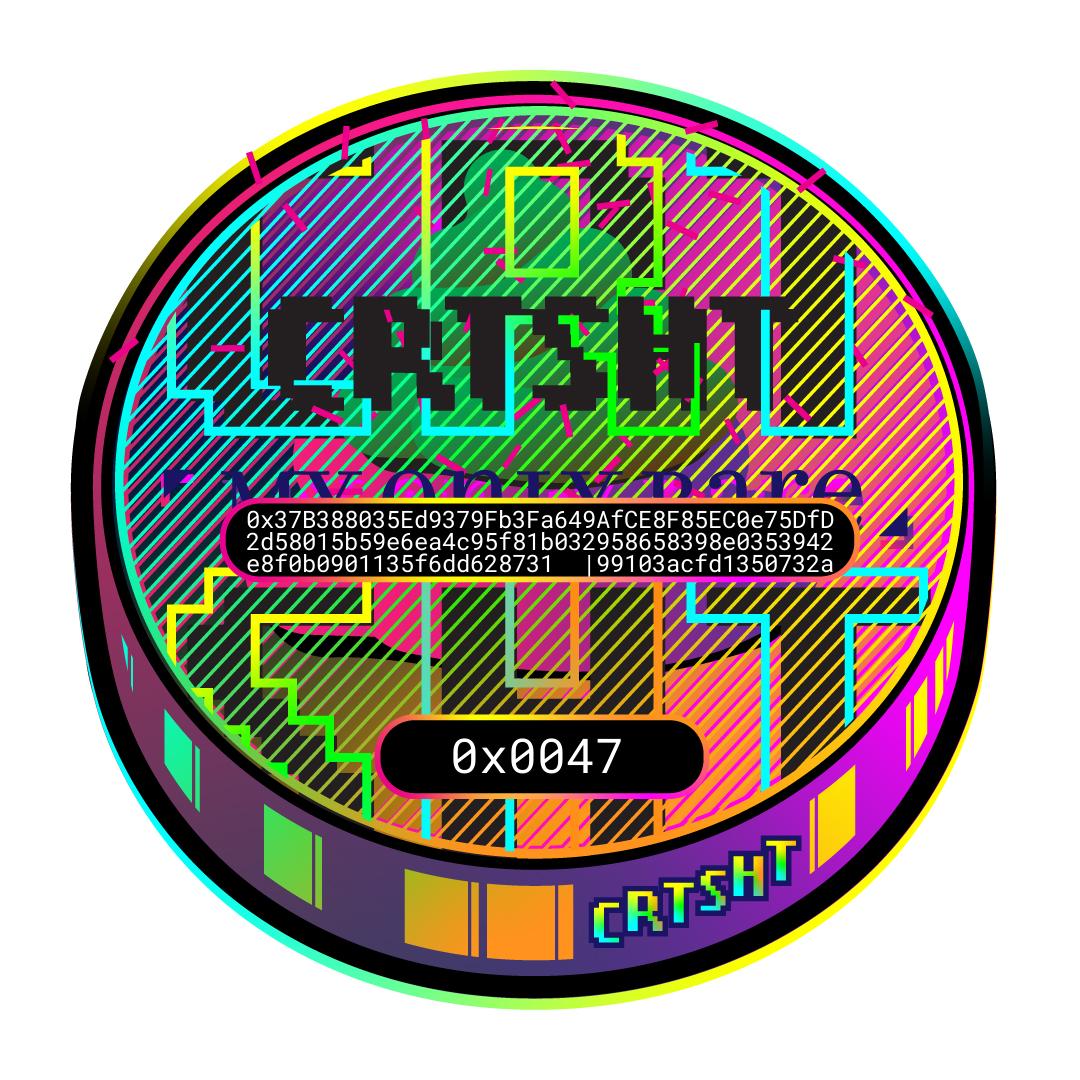
A hash points to an image carrying the signs of another hash, attached to a physical print whose fingerprint lives in the metadata.
Not quite a certificate. More like an amulet with too much metadata.
The wall
Among the recovered files was a plan for a wall.
The creatures had been generated, printed, hashed and given identities, but the planned encounter never happened. The family remained dispersed across folders, wallets and storage.
Together before we disperse.
Five years later, the 128 originals can finally occupy the wall that was already drawn for them. It is less a display than a temporary family portrait: complete only until the first work leaves.
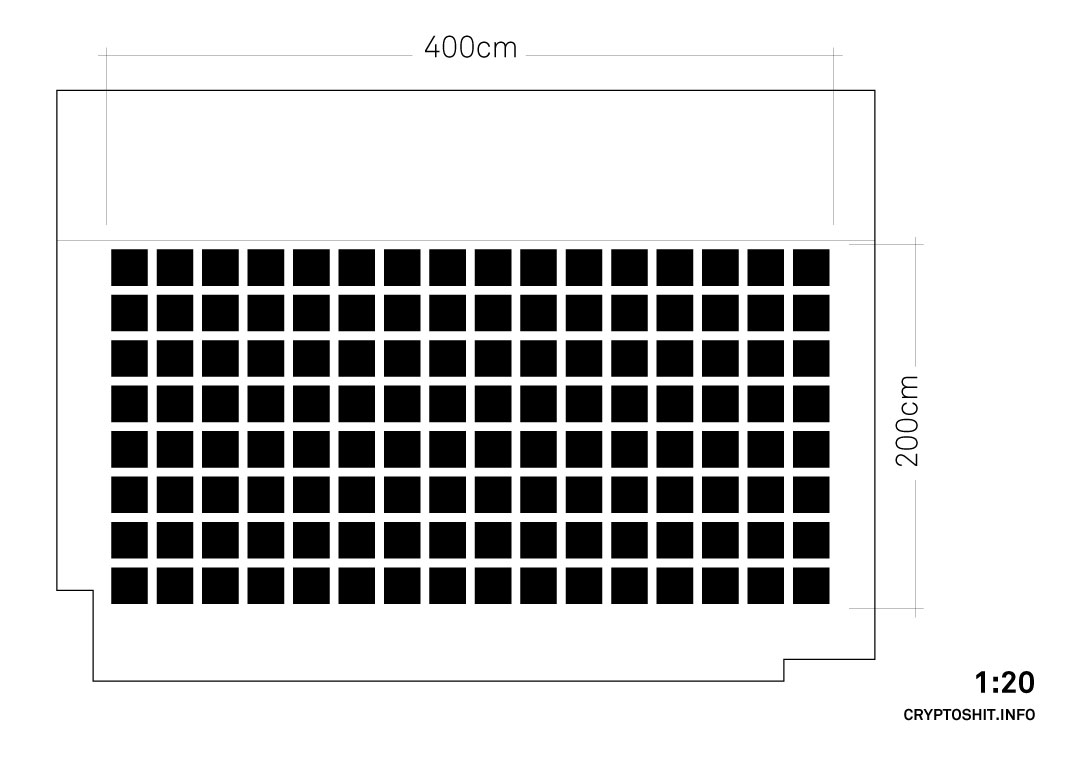
EXHIBITION-PLAN / ORIGINAL PROJECT FILE / CLICK TO ENLARGE
The draw
The complete archive is public. The assignment is not.
Everyone who enters receives one CRTSHT. Chance decides which identity leaves the wall with them. Nobody gets to rescue the prettiest specimen first.
The remaining ones together.
A number is pulled from the bucket.
The TGP, mooncake and sealed key leave together in a box.
The four visible words wake The Oracle.
With every draw the wall gets emptier. The archive stays full.
The shit
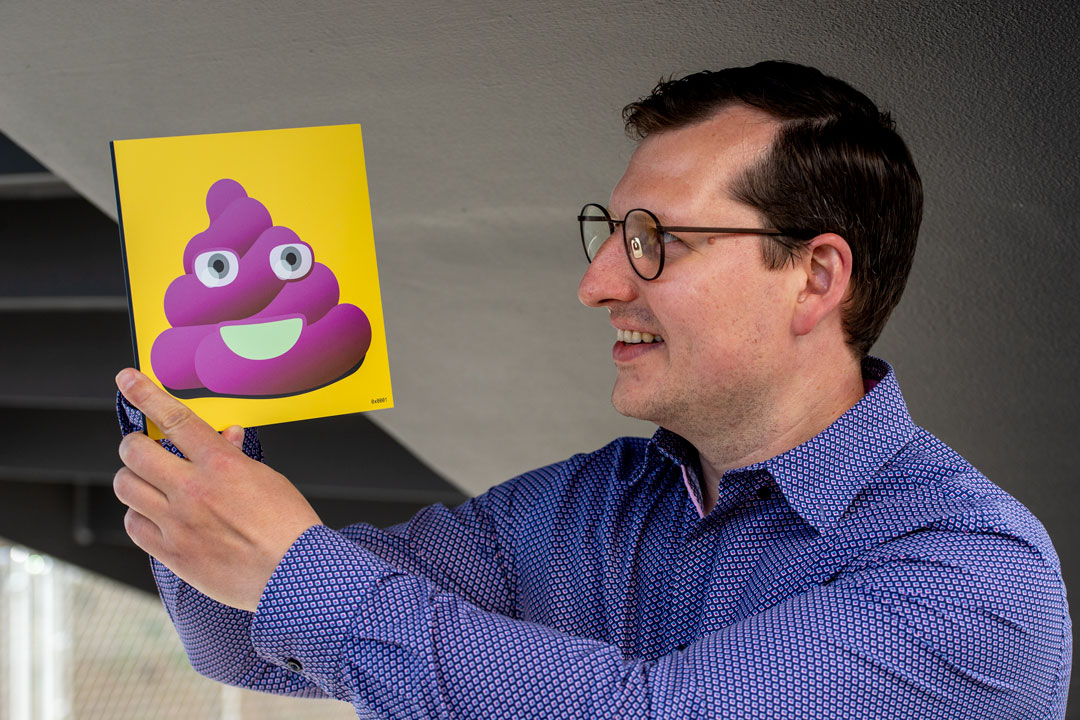
Shit happens.
CRTSHT was initiated in Zürich in 2021 by artist Marco Spitzbarth as part of the MyOnlyRare / MORE experiment. It began as an investigation into digital ownership at the moment digital ownership seemed ready to swallow almost everything.
The works were made. The wallets were created. The hashes were calculated. The NFTs were minted. The planned encounter never quite happened.
Five years later, the surrounding internet has changed enough to become part of the work. What once looked like infrastructure now also looks like evidence.
The files are being recovered, the records read again, and the 128 creatures can finally meet before they disperse for real.
The archive takes the evidence seriously. CRTSHT is under no such obligation.